Pages

Showing posts with label Passementerie Weave and Stitch. Show all posts

Thursday, 8 May 2014

Passimentrie - Final Developed Samples

This week I have been working on developing different samples which demonstrate different ways of creating a sculptural, yet manipulated piece of fabric. 

I decided it would be beneficial to my project to cut up some of the giant grey rouleaux in order to develop it directly into several embroidered samples. Some of the better samples that evolved through the week are shown below. I left a large proportion of the giant rouleaux intact so that it didn't ruin the dramatic effect of it.


 I used different machine embroidery techniques such as Pin-Tucking, Taylor-Tacking, Cording and the Reed Pleater in order to develop the above samples.


I researched textile artists that use translucent materials to create structures and came across Jan Garside and Caroline Broadhead, whose pieces (seen above respectively), gave me an insight into a possible context for my work. My pieces could be part of a sleeve for fashion or could simply be a piece of material, for example.

In order to channel my thoughts, I chose some words to focus my mind which were reflective of the twisted reed pleater sample in my previous post and gathered images of the fairground scene. These were: Spring, Twist, Contort and Compress. I believe the samples that I have developed over the week are reflective of these words as well as being reflective of the colour palettes I originally depicted from the visit to Blackpool Pleasure Beach and the Belle Vue archive visit.

Below are some of the other samples that I have developed with those words in mind.  


I initially thought about ways of manipulating translucent fabrics such as silk organza, so I looked at a fabric manipulation book by Ruth Singer which inspired me to use box pleating and pressing the fabric to contort it (see above images). I chose to use velvet as it has a pile and would spiral quite easily when made into a rouleaux and would role itself round naturally if I left it. 

Throughout this project I have found certain aspects challenging as the majority of techniques were new to me. However, I feel that I have gained an insight into the world of weave, through the use of looms and different yarns and also through the reed pleater which allows woven but embroidered samples. I would say that I have enjoyed the project but I have found it easier to use embroidery techniques rather than the weave techniques I learned earlier on in the project. The range of samples I have created throughout the project depict the fun and the dark side of the fairground through the colour palette I have used. I feel that I could have been more innovative with drawing references and looked at more images in the first few weeks in order to kick start some of the ideas that I had later on in the project.


Rouleaux

After experimenting with ruffles on the body, I decided to look at other ways that ruffles could be effective. By twisting a sample that I made using the read-pleater, I noticed that it could be representational of a carousel pole (as seen on my previous post). 
After reassessing my original photographs from Blackpool and Belle Vue, as well as secondary images from Pinterest and the Internet, I was influenced by the twisted and contorted shape of the poles. I decided to get some of my ideas down onto paper, so therefore I began to draw again.

Drawing with twists and spirals.


I then wanted to experiment with different compositions in order to give me more ideas for sculptural work in future samples. I created a giant rouleaux and as it fell to the floor it created the spiral above. The string that I corded onto the organza fabric gave the rouleaux structure and allowed a more 3D outcome. I also like the way that the string curls up as it is forced into the spiral shape.


Twisting the rouleaux around a cardboard tube. Because the string is sewn tightly to the fabric, it allows the rouleaux to contort and twist which creates the rippled edge and an interesting texture.


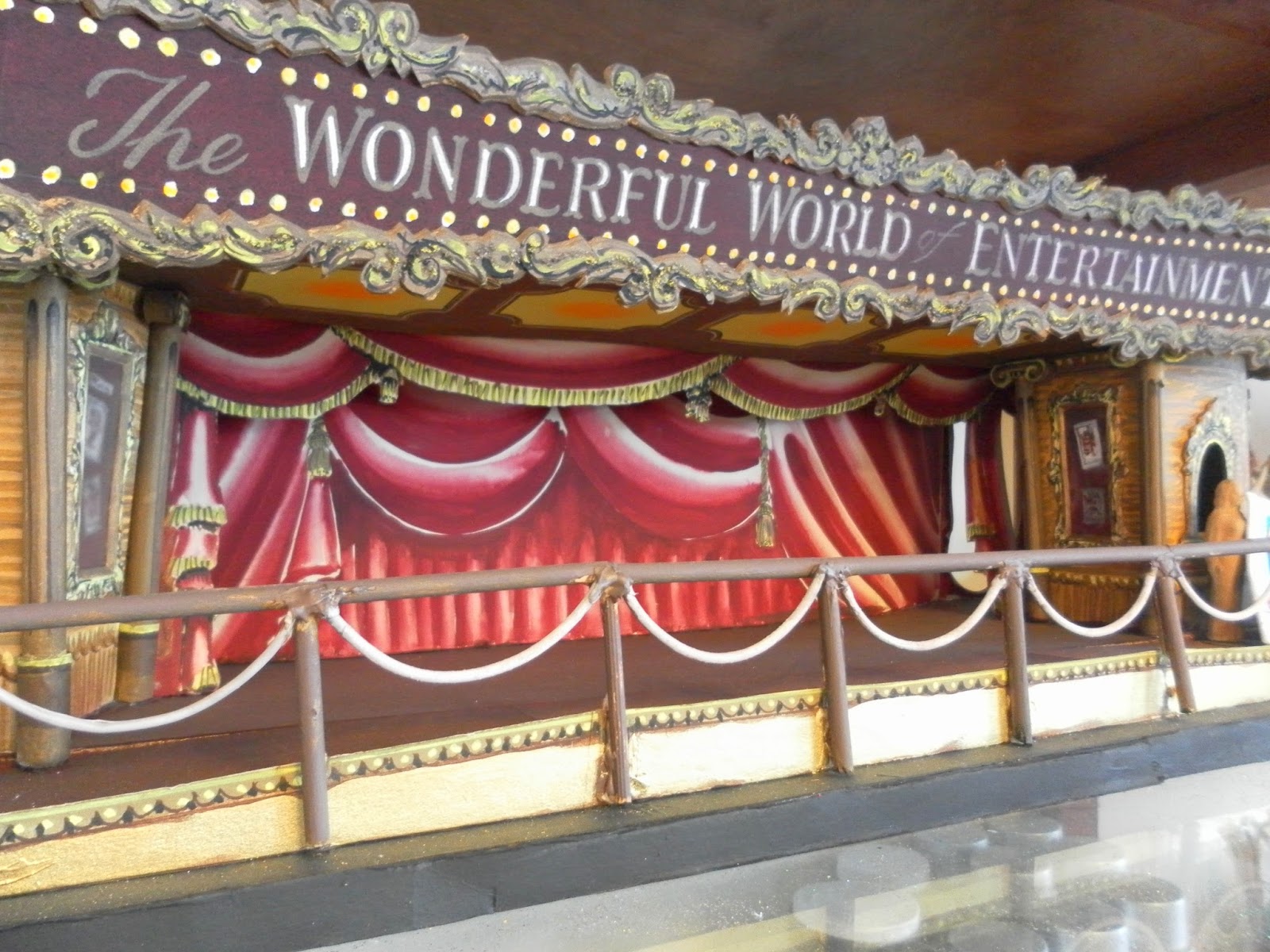
Experimenting with colour compositions - linked from previous research from Blackpool and original colour palettes - adding texture with edging. The pom-poms resemble the tassels on the curtains on the image above as well as the shape of the rouleaux being like the barriers in front as well as twisted like a carousel pole at a fairground.  


To move the project on for the final week and to finalise my ideas, I would like to experiment with manipulating fabrics in order to create interesting textures like I have achieved with considering a more structural approach. I will work with translucent materials to allow the stitch to show through and allow some more structural, manipulated samples. 

Monday, 7 April 2014

Lines of Enquiry

After experiencing the processes associated with weave, I have now moved onto the embroidery side of the Passimentrie project. I would like to collaborate these processes and the materials I used in order to influence ideas within the embroidery part of the project. This week I set out to create 'edges' from materials such as ribbons and trimmings which could be used in the interior or fashion industries. 

From weave, I have learned to appreciate colour and composition which I feel will allow me to think more sensitively within my embroidery. 


I have used already-learned processes such as hair-pinning, cording and appliqué as well as new processes such as ruffling, pleating and gathering in order to create these edges. 


Could this be an abstract representation of a carousel pole?

The processes that I feel have allowed me to develop key ideas the best were the Read Pleater and the wide gathering foot on the Bernina machines (although this took me a while to master). They have allowed me to take a more 3D, structural approach and are reflective of the rides I photographed on the visit to Blackpool Pleasure Beach at the beginning of the project. 


I would like to collaborate weave and embroidery more closely through ruffling and pleating as I found these processes surprisingly effective in creating woven, yet embroidered edges. I have found it easier to use embroidery processes to translate woven effects rather than on the weave looms specifically. 

For the exhibition at the end of the project, I would like to further collaborate embroidery with weave in order to create something more practical such as a collar or cuff, for example, or perhaps a more sculptural sample which I could display. I will use learned processes through weave and embroidery to do this and assess what has worked best throughout. 

To further develop my ideas I now need to research around the compositions of collars or cuffs or sculptural textiles so that I can create a sample around my current ideas and processes that I have learned so far. To carry out this contextual research I will look online at Pinterest or other blogging sites to take some inspiration from other designers that have done something similar. I will need to look more closely at the shape or the composition of the pieces that I find in order to influence how I could create my own.

Monday, 31 March 2014

Development of Weave Samples - Research

This week I set out to develop the samples I created from last week by relating the weave patterns and yarns more closely to my drawings and visual research from the archive visits. 


I gathered trimmings and yarns from fabric shops which relate closely to elements of the photos I took from the archives such as tassels and pom-poms which I will use in my woven samples. 


Experimenting with colour and arrangement of lines
I have learned to appreciate the ratio of colours within my work and how this relates to my drawings. I have been heavily influenced by different yarn qualities such as texture and compositions when arranged next to each other. I have also been strongly influenced by the tassels from the curtains of the 'Wonderful World of Entertainment' image above and my colour palette is tailored slightly more towards that image than others. 


I have attempted to experiment with different patterns on the loom, incorporating the colours and compositions from my drawings - the chevron pattern has interlinking lines which link to the majority of my drawings. The texture of the tassels in my original images and drawings is depicted through the use of pom-poms in all of my samples, whether they are brightly-coloured to symbolise fun at Blackpool Pleasure Beach or darker which represents the lack of fun and a darker side to fairgrounds such as Belle Vue.

Visit my Pinterest page to view some of the things that have inspired me through the start of this project along with contextual images. I feel that my samples would be tailored towards the interiors market, or perhaps as smaller pieces in the fashion sector such as collars or cuffs, for example. 

I wanted to experiment with the composition of my woven samples in order to refine my ideas and identify what has worked best so far in the project. 


I developed two more samples which are reflective of this; one being 'fun' like at Blackpool and one  being 'dark and scarce' like at Belle Vue.


Saturday, 22 March 2014

Passimentrie Weave - Week One

I've found lots of challenges this first week in weave - creating the warp, threading the loom and following the weave patterns. 

I started to create wrappings to inspire me in terms of colours to use in my weaves. I initially created two colour palettes; one bright and one dark to symbolise fun and beauty from Blackpool Pleasure Beach and the dark side to fairgrounds like was demonstrated at Belle Vue. 


I also designed my warp with this in mind - I wanted a lighter side and a darker side which could reflect my initial colour palette. I have 24 ends on each side; three lots of eight. This creates a float when I weave into it which creates slight gaps which links to the structure of the rides in Blackpool as well as the distance between the two attractions. 


Before I began weaving, I wanted to refine my colour palette in order to put colours together that complimented each other. I also wanted to look for some yarns and threads that would create an unusual and different texture on the surface of the woven pieces. I found some yarn at home that looked slightly like purple mohair and some yarn with bobbles on. 


I decided that for this first week I would concentrate more on the bright, colourful, fun side so I experimented with different yarns and threads in order to sample. 


I like the effect of the thicker chenille yarns with the warp colours along with the fancy yarns I found and used. This adds an element of 'fun' into the samples.


Tuesday, 18 March 2014

VV Rouleaux

VV Rouleaux was established in 1990 in London. The business manufactures ribbons, trimmings, edging and beads and sells them to the public along with large design houses such as Paul Smith, Karen Millen, Marc Jacobs and Julien Macdonald who use them in their garments. 

When Annabelle from the company came to speak to us she brought some samples of what she has made. 

My favourite samples were the ones that had fringing on the edges of the woven strips. The fringing was made from horse tails on some of the samples which was an unusual texture. 


 I would like to attempt the looping on the top of this strip of weave when it comes to creating my own samples. 

I also found that a few of the samples were brightly coloured which linked to one of  the colour palettes that I have created for my own samples. I intend to weave using a bright colour palette with muted tones down one side to symbolise the 'dark side' of fairgrounds then use embroidery techniques and beading to start creating accessories such as collars, for example.